Blog: April 14th 2026
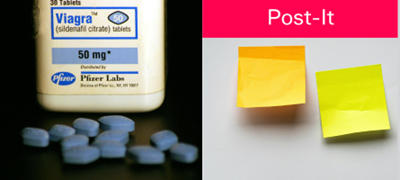
What do Post-it Notes, Viagra, Bubble Wrap, Listerine, and Play-Doh have in common? At first glance, absolutely nothing, except that everyone knows them. But their real connection is far more surprising: They all failed before they succeeded. Or at least, they failed at what they were originally meant to be.
This raises an intriguing question: How can products once considered useless, end up becoming part of our everyday lives?
When Failure Becomes the Starting Point
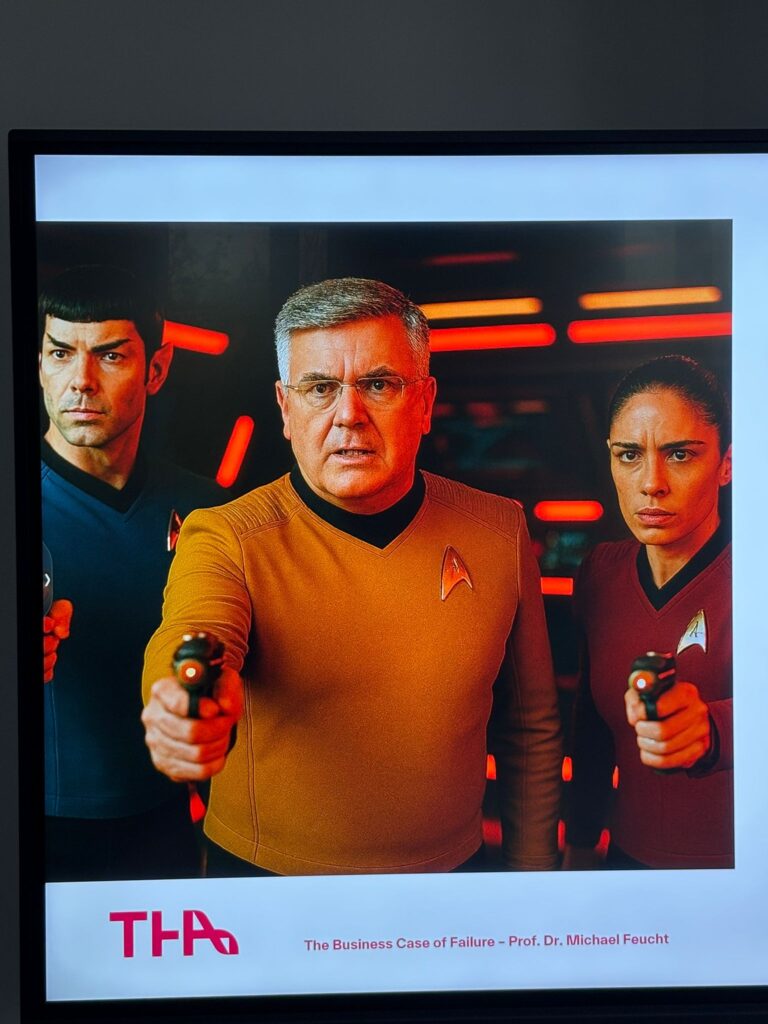
Instead of beginning with success stories, this week’s seminar on “The Business Case of Failure” held by Prof. Dr. Michael Feucht of the School of Business deliberately flipped the perspective. It started exactly where most people hesitate to look: Failure. But not as a dead end. It was rather a starting point for innovation, reflection, and sometimes even unexpected breakthroughs.
One of the key takeaways was that failure can be an opportunity. In many cases, what seems like a failed idea can lead to something entirely new. This phenomenon is often described as side-effect success, when unintended outcomes open doors to innovation.
Another important distinction discussed was between technical failure and market failure. A product can function perfectly and still fail commercially, or it can struggle technically but inspire a completely different, successful application. The crucial lesson: it’s not just about whether something works, but whether it fits the right context. This ties closely to the concept of “failing forward”. Learning from mistakes, adapting ideas, and continuously improving instead of giving up.
Famous Failures That Changed Everything
Looking at real-world examples makes this idea even clearer. Post-it Notes, for instance, were born from a “failed” attempt to create a super-strong adhesive. What emerged instead was a weak glue, that was seemingly useless at first. Only later did someone recognize its true value: a light, reusable adhesive that wouldn’t damage paper. Even then, success didn’t come immediately. It took free samples and user experience to reveal its full potential.
Viagra followed a completely different path. Initially developed as a heart medication, it failed in its intended use. However, during testing, researchers noticed an unexpected side effect that ultimately transformed it into one of the most well-known pharmaceutical products in the world.
Bubble Wrap tells yet another story of redirection. Originally designed as wallpaper, it failed almost instantly. It didn’t succeed as insulation either. Only later was its true purpose discovered: Protecting fragile items during shipping.
Listerine adds an interesting cultural twist. During the Prohibition era in the United States, when alcohol was banned, people began using it in unconventional ways because of its alcohol content. A hygiene product suddenly gained entirely new uses through user reinterpretation.
And then there’s Play-Doh. It started as a cleaning product for wallpaper but only found real success when it was reimagined as a children’s toy. A perfect example of how a product doesn’t necessarily fail, but its original purpose might.
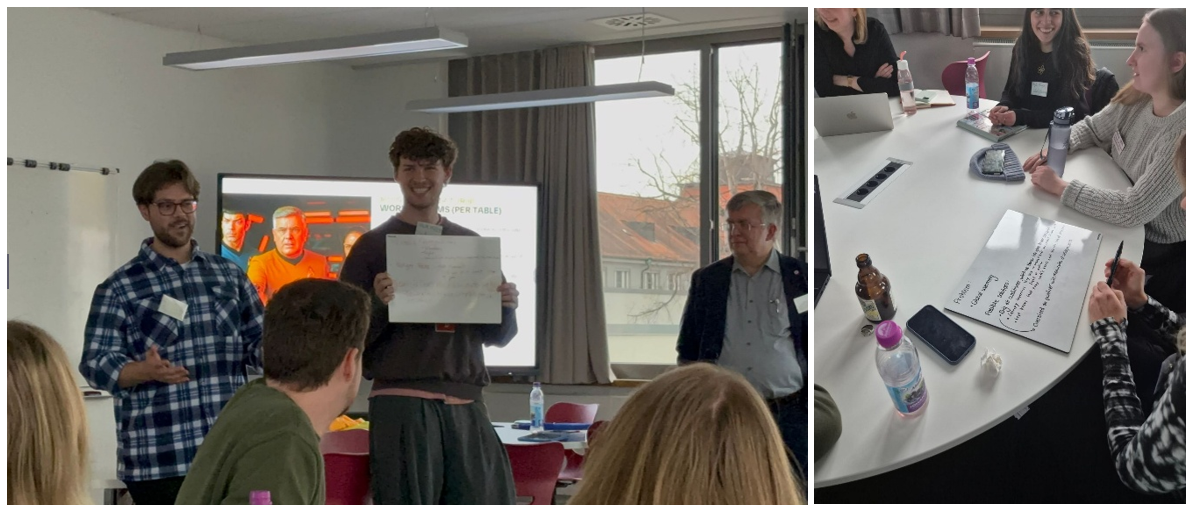
Our Own Experience: Creativity Through “Failure”
The most exciting part of the seminar came in the second half, during a group exercise. Our task was to work with AI, like ChatGPT to develop creative solutions to a problem of our own choosing ideas that went beyond the obvious and didn’t even have to be realistic.
What we experienced was exactly what the seminar had been teaching: Starting from ideas that initially seemed unrealistic or even absurd, new possibilities began to emerge. One concept led to another, and suddenly we found ourselves exploring applications we hadn’t considered before.
It became clear that creativity often grows out of imperfection. What first appears impractical can evolve into something meaningful when viewed from a different angle. Here are the group’s best ideas, we simply couldn’t keep them from you:
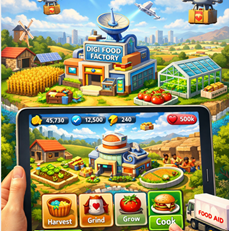

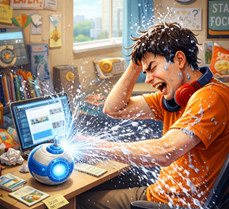

in two places simultaneously

All in all, the seminar has shown us that just because you think you’ve failed or that an idea is doomed to fail, that doesn’t necessarily mean it’s true. This is a particularly important takeaway for our future academic careers and working lives. We’ll fail and make mistakes time and time again, both at university and in life. The important thing is that we don’t give up or bury our heads in the sand because of it. Perhaps there is still a whole new perspective that can turn our failure into a whole new opportunity. In any case, we personally went home feeling very positive after the seminar!
So, What Can We Learn?
Across all these stories, a clear pattern emerges: failure is rarely the end. Sometimes it’s just a misdirection. Sometimes it’s about timing. And sometimes, it’s simply a lack of imagination about what something could become.
Maybe that’s the real takeaway:
If failure so often turns into success, how many “bad ideas” are actually just good ideas in the wrong context? What about you? Have you ever experienced a “failed idea” that turned out useful?
Authors: Juan Diego Hartmann González, Merle Frey, Lilli Sandmeir, Lea Sandmeir



Leave a Reply