Blog: May 5th 2026
Understanding Mistakes Across Cultures: From Classrooms to Entrepreneurships
Alisa Kasle-Henke
Lecturer for Business English Communication and Cross-Cultural Management at the School of Business and the Language Center ZSI
Authors: Tanja Rohrmayr, Clara Springer, Beisyth Yepes
In the first part of the previous Honors Seminar class, Alisa Kasle-Henke, Lecturer for Business English Communication and Cross-Cultural Management at the School of Business and the Language Center (ZSI), took us on a journey through the different dimensions of mistakes and the various meanings they can have across cultures.

To get a sense of how different mistakes are perceived in different cultures, let us begin with a small time-travel experiment:
Imagine you are 12 years old again. You are standing with your best friend in front of the music classroom. In principle, music is a wonderful subject – one that is supposed to brighten everyday school life and allows you to express your creativity.
However, you know that your sixth-grade teacher sees things somewhat differently. This music lesson will begin just like every other lesson she has ever taught: With a short “questioning round.”
The teacher plays different triads on the piano. Afterwards, she calls on individual students. Those students must identify, solely by listening, which triad was played and which notes it consisted of. Every student receives a plus for a correct answer and a minus for an incorrect one. You already know that you will receive a minus – not because you failed to prepare, but because your strengths may simply lie elsewhere: Perhaps in learning music history or analyzing songs. Recognizing musical keys by ear, however, is a highly specific skill.
But one thing remains: You feel ashamed for giving the wrong answer and therefore making a “mistake”. This fear follows you into class each time you attend music.
Our little journey through time was not fictional. This scenario actually happened to one of the authors of this blog. As we learned during the Honors Seminar, the concept of this “Ausfragen” is not uncommon in Bavarian schools. During the discussion rounds, several classmates shared similar experiences.
We also discussed various exam and school situations in cultures other than Germany, such as Denmark, China, and the United States.
Alisa told us that these different cultures often have very different approaches to exams and learning situations. The typical German system of “Ausfragen” would probably completely unsettle an American or Japanese exchange student.
On the other hand, a German exchange student in the United States might find it unusual that the parents of their classmates receive a “My Kid Is an Honor Student” bumper sticker when their child is accepted into an Honors Program.
Likewise, a Chinese student might only ask questions in class if they had a very good reason to do so or if something remained completely unclear to them, whereas asking questions openly would seem entirely normal to many German students.
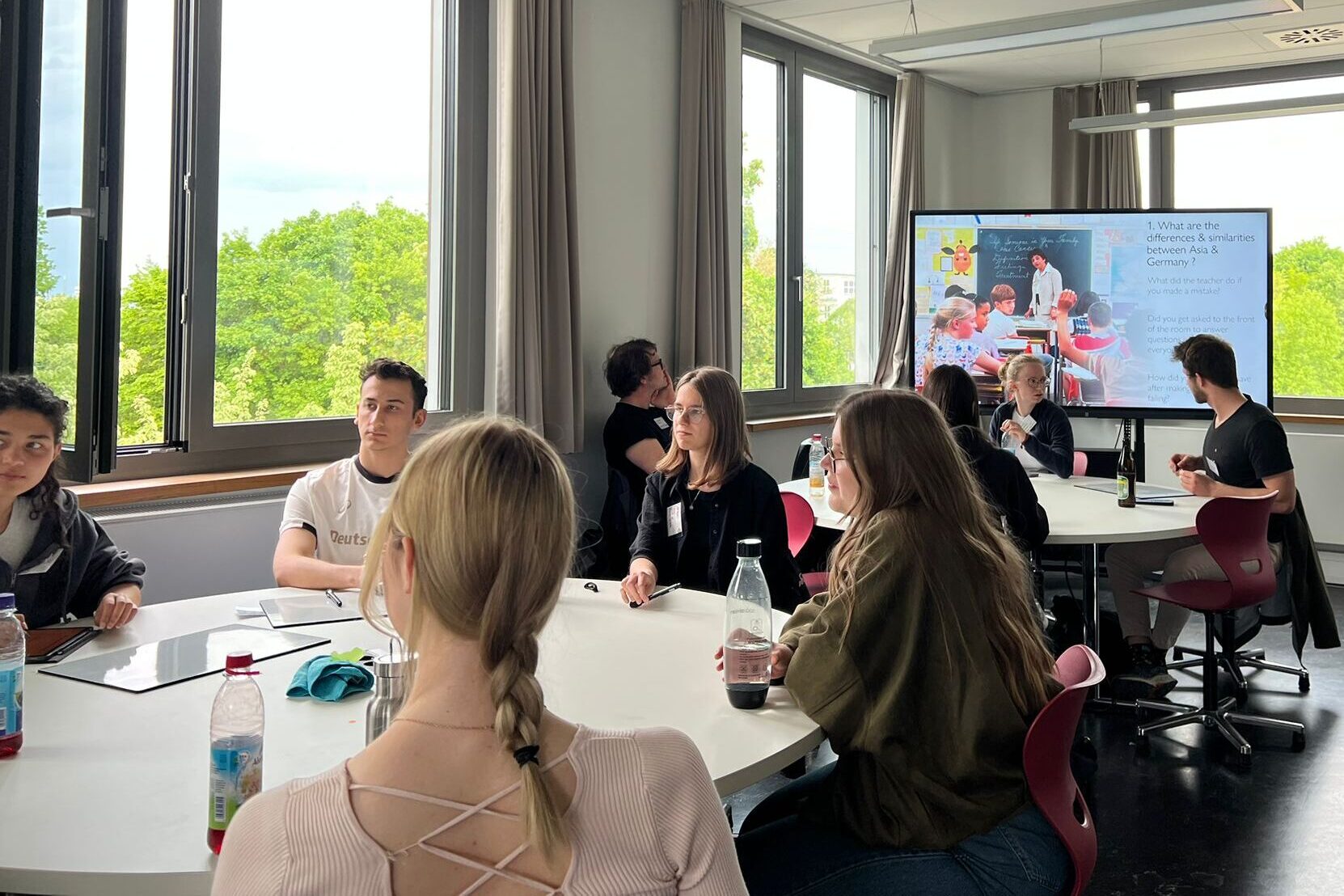
This led us to several broader questions: How can students be motivated effectively? How does motivation differ across cultures? And how do people in different cultural contexts react to mistakes, praise, and uncertainty? These questions were explored in the second part of the seminar.
Cultural Views on Mistakes in Education
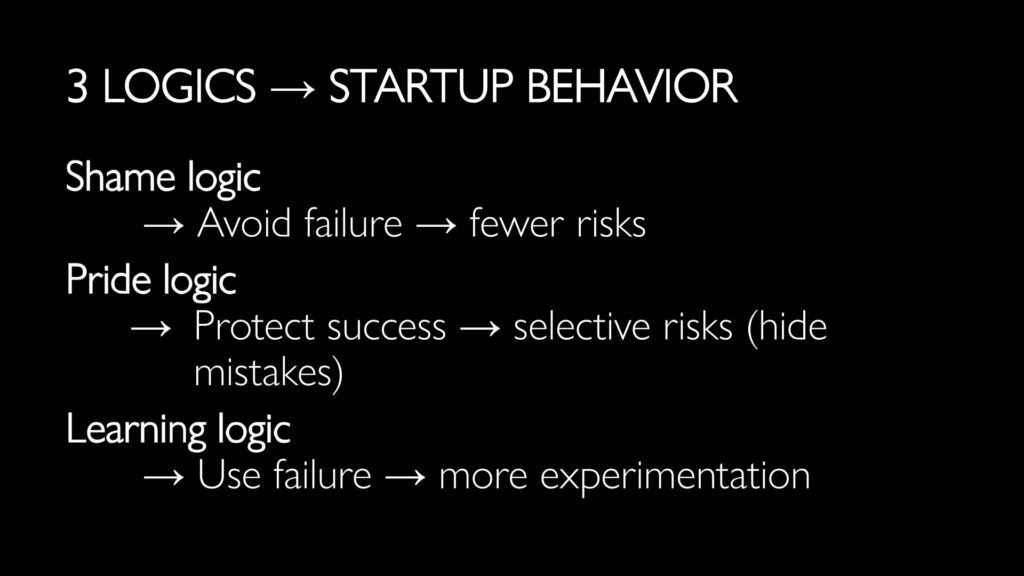
To better understand these differences, we were introduced to the concept of motivational logics. They are cultural patterns that explain how people are encouraged to learn, and how mistakes are emotionally interpreted within a system. Some of these are shame, pride and learning, and every culture in the world is guided by at least one of them, which are reflected in their education system.
In China, education is largely shaped by a shame logic, which focuses on protecting one’s reputation and social relationships. High academic pressure, long school days, and decisive exams like the Gaokao create an environment where mistakes are something to avoid, as they can lead to public embarrassment or disappointment of others.
A similar shame-based logic can also, at times, be found in Germany, a country where exposing a student’s mistakes in public (for example, through “Ausfragen”) “motivates” them to learn so as not to be shamed in front of their peers, as a certain standard of excellence is expected.
In contrast, the United States tends to follow a pride logic, where achievements are celebrated and individual effort is publicly recognized. Students are motivated through grades, awards, and extracurricular success, and mistakes are often reframed as part of a personal success story rather than a source of shame.
Finally, Denmark represents a learning-oriented motivational logic, where mistakes are seen as a natural and necessary part of learning. Grades are not given until age 13-14. Low hierarchies between teachers and students, combined with a strong focus on cooperation rather than competition, create an environment where errors are less threatening. This approach aligns with the cultural principle of Janteloven, which discourages standing out and emphasizes equality.



Together, these examples show that mistakes are not just individual experiences. They are deeply shaped by cultural expectations, emotional responses, and educational systems. How different parenting and educational styles can vary across cultures is also illustrated in a very amusing and vivid way by the comedian Sindhu Vee: https://www.youtube.com/shorts/QecYwkTX4jI
Our Fear of Failure
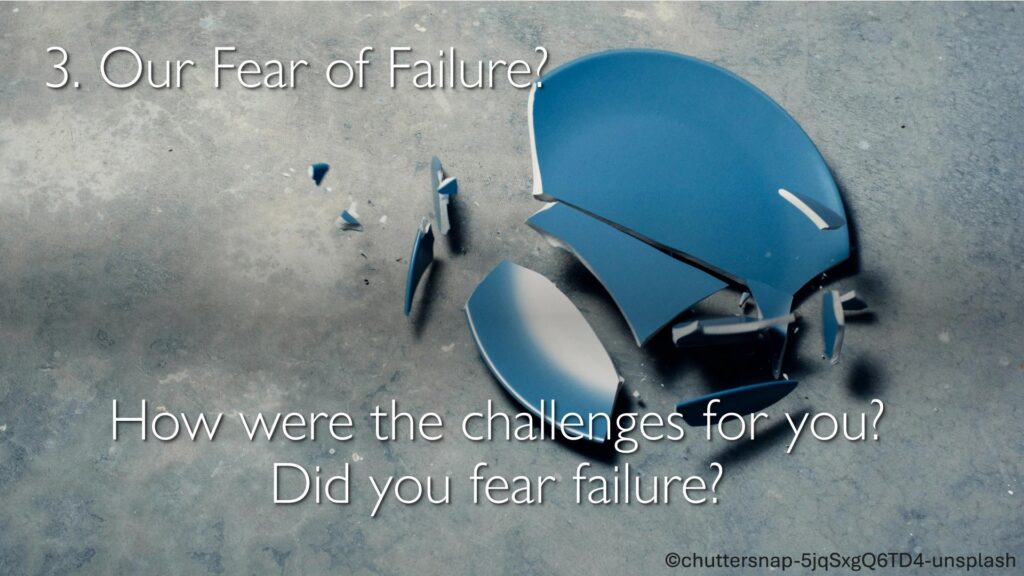
From the beginning of the semester, we were given different tasks to face the fear of failure. These included everything from asking 3 different strangers to lend you 5 Euros (but not to acutally keep, but to give them right back) to ask someone you do not know to go have coffee, or eat in the mensa or even sing a song.
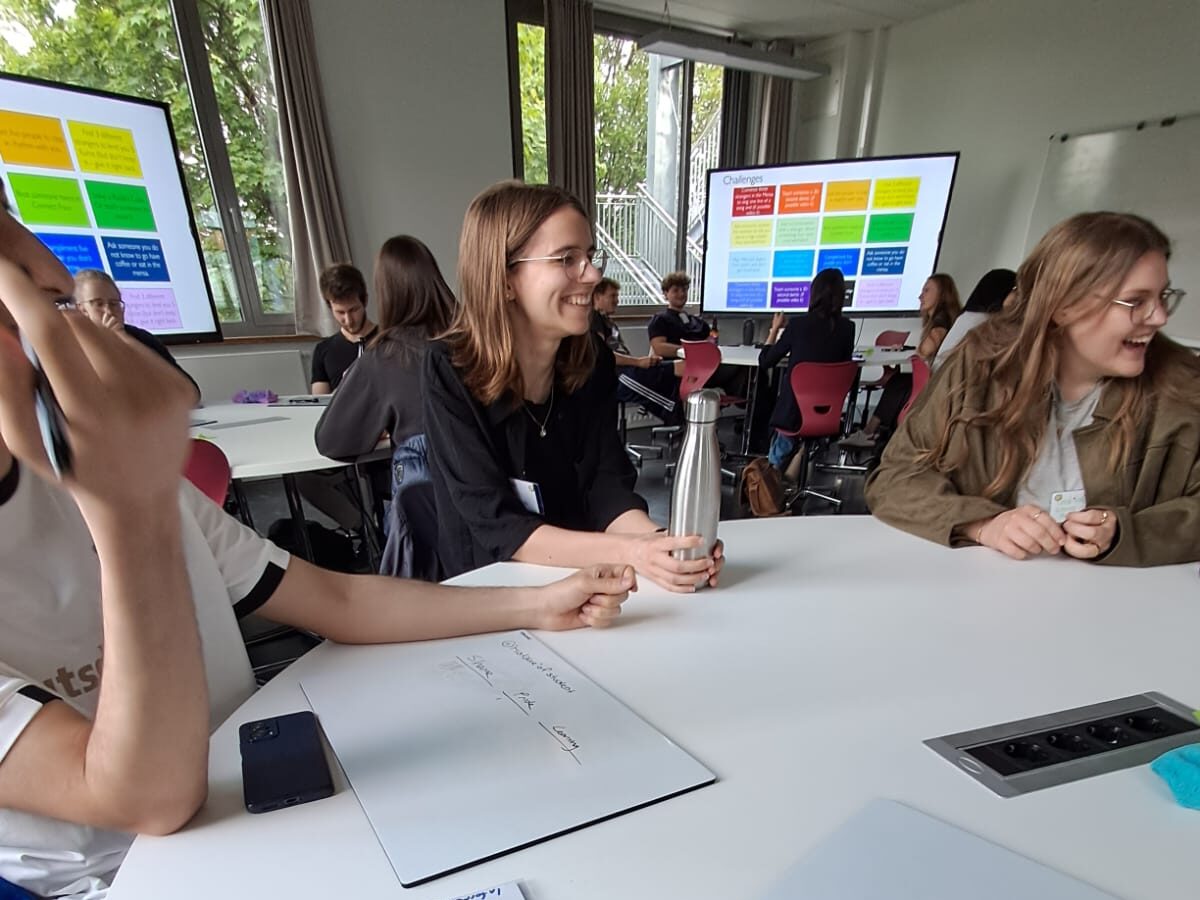
After discussing each of our stories of failures and successes with the task we had been given, the question came up: Would you feel just as afraid to complete your task in another country? Some people felt that based on their experience abroad in other cultures, they would carry out the task without a second thought, as they would have no fear of being rejected. This shows that each culture defines what is and isn’t permitted, what constitutes a mistake according to the norms governing that society, and the feelings of shame, pride or learning associated with each situation – feelings that often limit us, preventing us from becoming anything other than what is expected of us.
Entrepreneurship
So, what do all of these topics have in common: Mistakes, education and entrepreneurship? As we experienced and learned, all the cultural drivers form a society and its people. This results in a different mindset for entrepreneurship around the world. If we would ask people around the world whether they would start up a business, the answers would probably be different.
Therefore, which do you think is the country with the most start-ups, if you compare China, Germany, the USA and Denmark? It’s highly likely that your answer was the USA. Does that mean that the pride logic is more suitable for entrepreneurship? Yes and no! In countries with fewer start ups (per head) compared to the United States, such as Germany and Denmark, the start ups are more likely to still exist after 5 years. However, this does not mean that the failure rate is lower in these systems. The people just fail a step before really starting a business, for instance through the nordic mentality of “Janteloven” (which states that you shouldn’t stand out) or just high bureaucracy, or because they don’t want take a risk. China has a lot of start-ups, but actually has the lowest success rate after 5 years compared to the other three countries.
The whole topic of cultural views on mistakes is complex. Therefore, what should we do? Can we profit from mixing up different cultural views on mistakes to build up a higher resilience and another error culture?
Another important aspect of this topic is the view on second chances. Does a society allow people to try again after failure? If this is more likely, maybe people will try again, or they won’t be as afraid of feeling ashamed at the beginning because it’s accepted to restart.
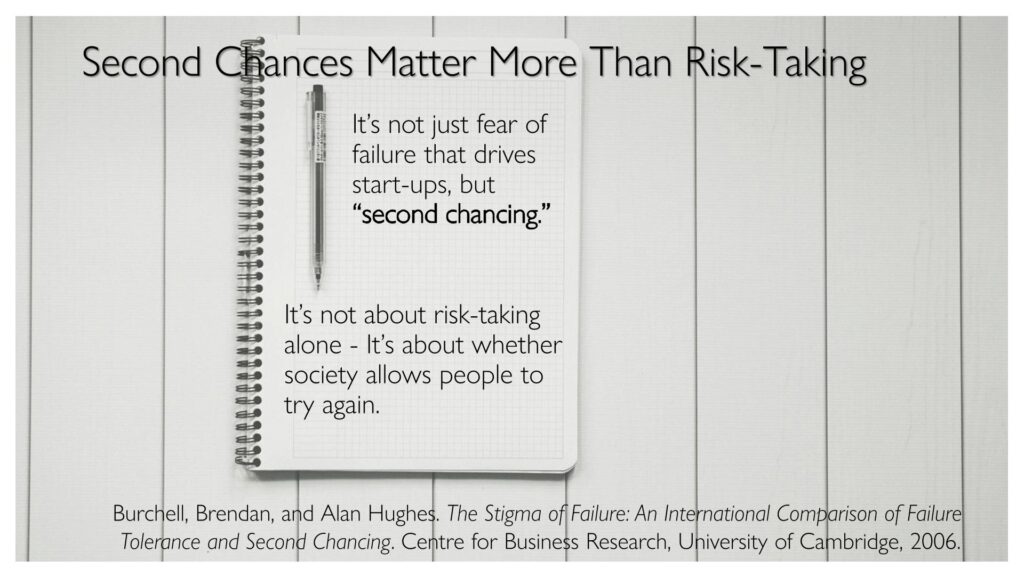
At the end of the seminar session, we were asked if we would consider starting a business, based on our own backgrounds. In one conversation, someone shared that they would like to start a business. Although if they did so, everyone in the family would know about it. If they were to fail, it would be known to everyone, but they said something like ‘Why would that matter?’ The possibilities and the impact of starting a business are much higher than if they wouldn’t do it just because they are afraid. This is really inspiring to us. Maybe everyone should talk more. It might encourage us to face our fears. Or we could encourage other people together.
So now, what do you say is a mistake always a mistake? Who decides what is right or wrong? And how should we react after a mistake? And – have you ever made a mistake in one culture that would NOT be considered a mistake in your home culture? Please comment below!


Leave a Reply