Blog: May 13th 2026 (Un)Control
Lecturer: Prof. Andreas Muxel, Faculty of Design
Authors: Carmen Goy, Runa Wolf
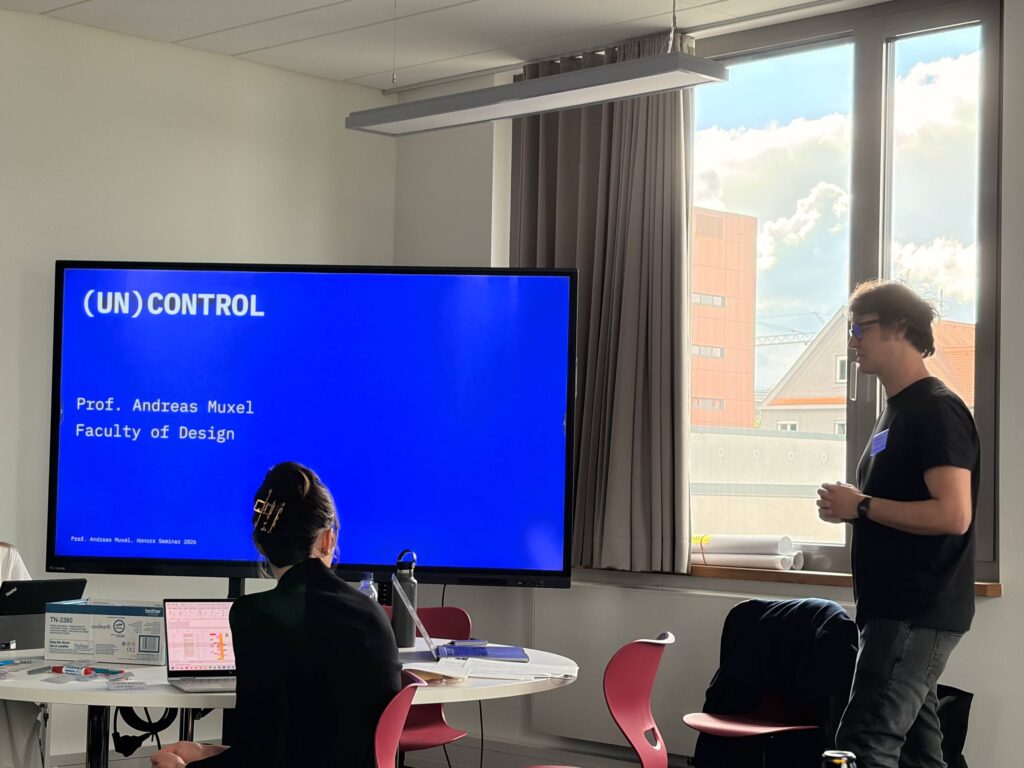
“I have everything under control at all times” might not be a sentence most of us ever say with confidence. But when we ask ourselves whether humanity has the ability to completely control its environment, many would argue so. Control gives us power. Uncontrollable processes make us feel uneasy and stressed, which is something the honors seminar was able to feel firsthand in this week’s lecture. But is control always possible or even helpful?
The Power of Control?
This week’s seminar first gave us a look into the past and our changing relations with computers, who might be the ultimate “powertool”. Western culture relies very heavily on seizing the control of everything around us. This world view can be seen in all areas of life. Don’t want to be surprised by a sudden rainstorm? Just look at your weather app and see a perfectly curated overview of the next week or so. Feel tired at work? You might want to buy a sleep tracker to change that in the future. Computer science has come a long way in that it no longer only calculates, but makes it possible for us to interact and form relationships with machines, seemingly optimizing ourselves and everything around us in the process.
You should walk the car!
This didn’t so much change with the rise of AI in the last few years, but was more so enhanced even further. Large language models (LLMs) are able to act as personal assistants in every imaginable scenario and humanoid robots can effectively replace us in the years to come.
But is artificial intelligence always as smart as it may seem at first glance? This question was illustrated during this week’s lecture by a few different examples. In 1997, a for its time quite unusual game of chess was played in New York City. The then chess world champion Garry Kasparov competed against an unusual opponent: the AI Deep Blue, a machine trained to win at chess games. This rematch took place after Kasparov had won the first match the year before. The much-discussed outcome of this game, however, sparked conversations about the power artificial intelligence might gain with technological advancements to come. The reason for the AIs unconventional win was simple though: Deep Blue made a seemingly very bad move, making Kasparov anxious. Could the AI really have made this obvious of a mistake? The conclusion he took was that Deep Blue simply must be able to see further ahead in the game than even a world champion was able to and therefore sealed his own fate. The game was lost for Kasparov all thanks to a bug in the AI and its confusingly bad move. To Kasparov and many of us today, artificial intelligence not only follows its programming but also embodies the laws of reason and as a result, it seems more likely we had a lapse of judgment than the AI being wrong.
Online discussions, however, seem to shift on this matter in recent times. A post went viral not too long ago showing the following conversation with an AI chatbot:
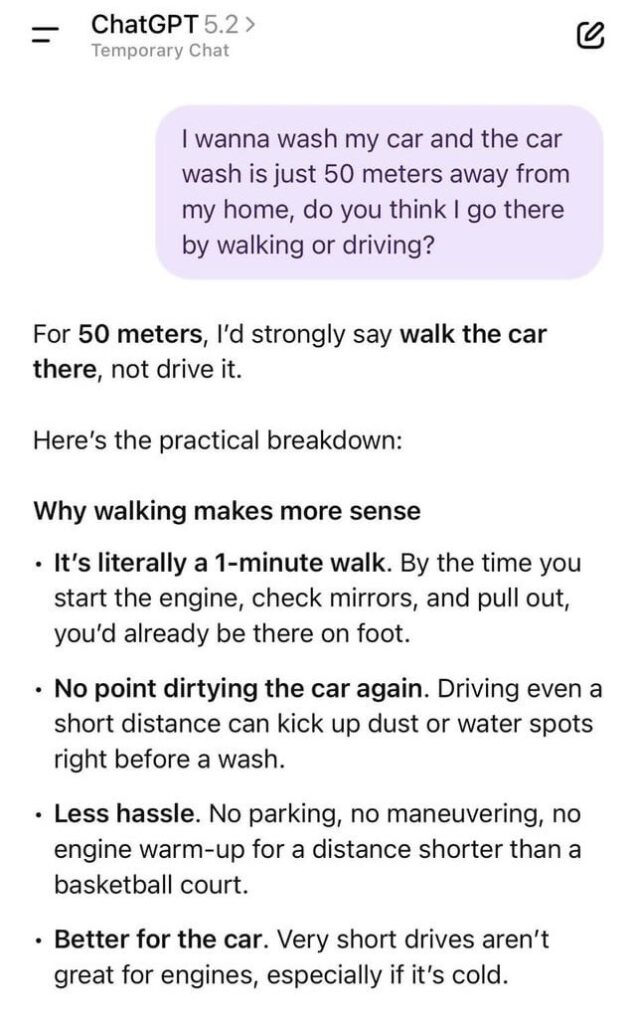
While walking your car to a car wash is immediately nonsensical to most of us, this example proves that the question of the optimization LLMs can really bring is more relevant than ever. When questioning artificial intelligence, as with any process of control, we should ask ourselves what is lost when we take reality into an abstract version of itself.
The Challenge
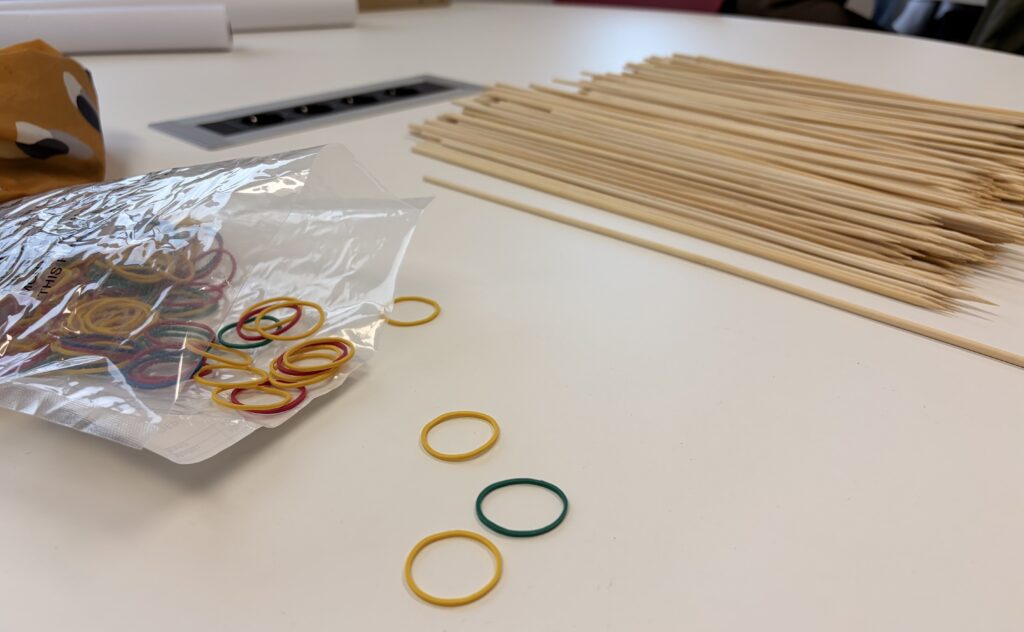
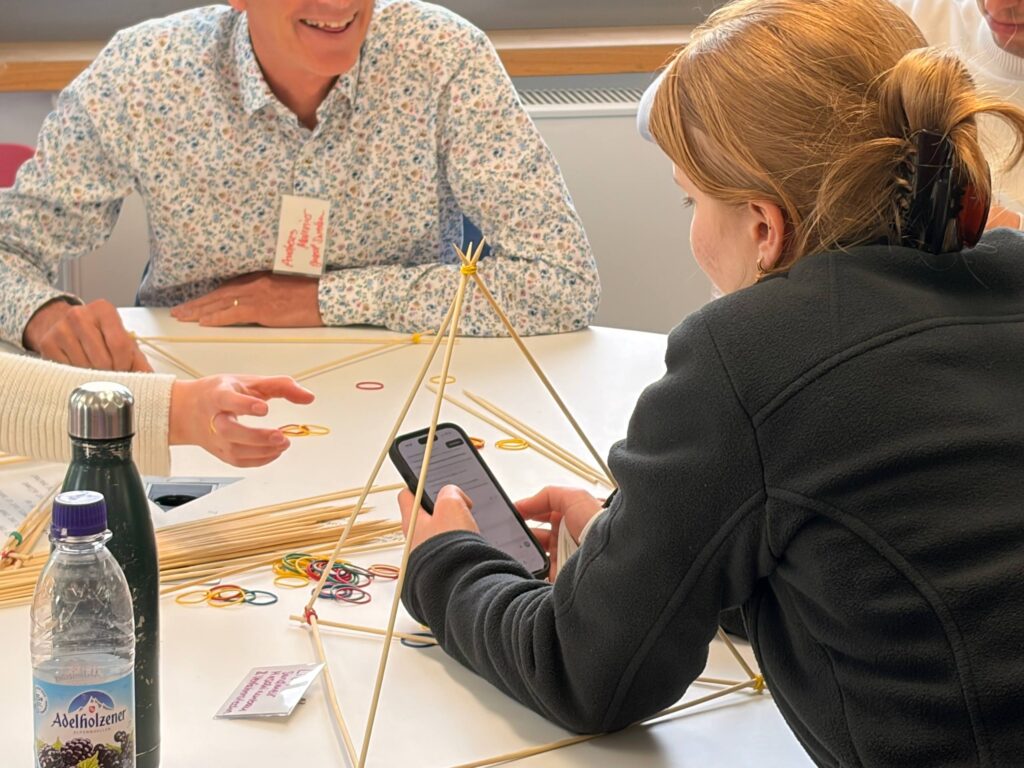
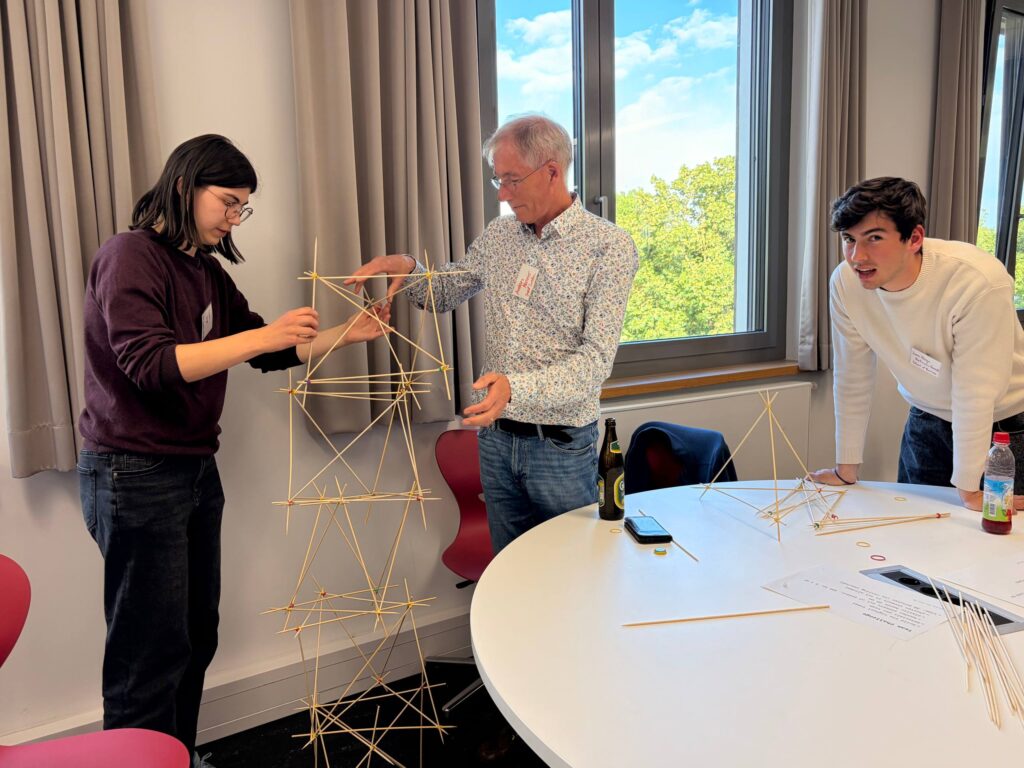
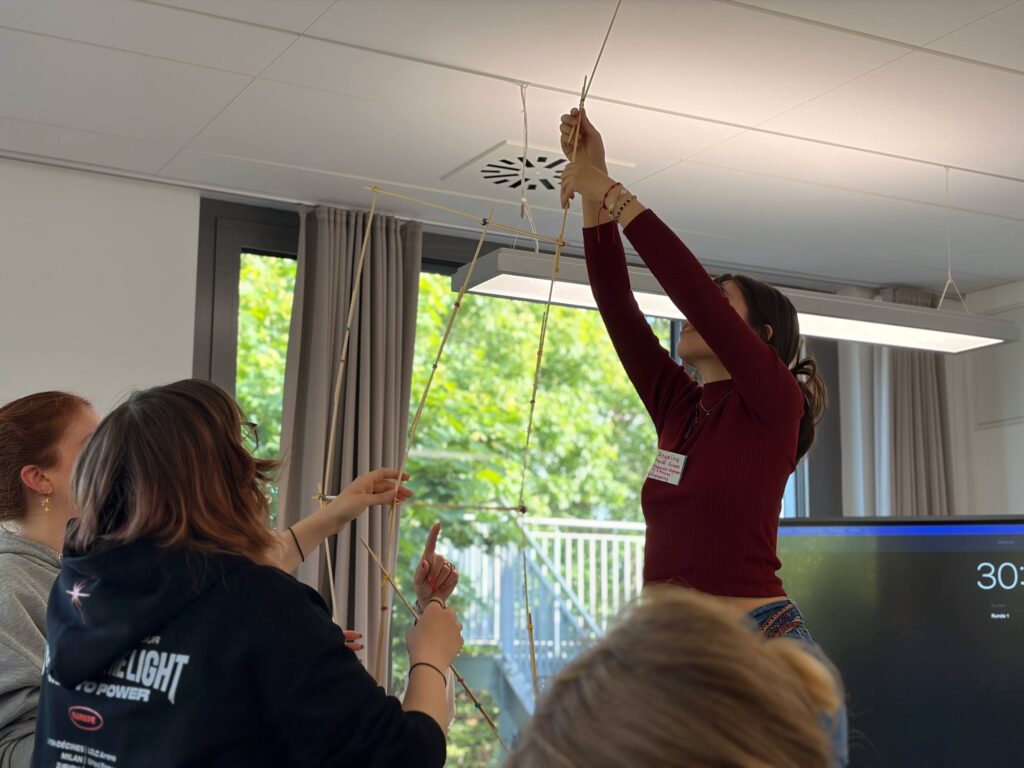
But the Honors seminar would not be the Honors seminar without some kind of challenge. So, the next part of the session turned into a team competition. First, we were divided into six groups. Then came the task: Build a tower reaching all the way to the ceiling using nothing but wooden sticks and rubber bands. But of course, that alone would have been too easy, so each team received an additional constraint:
Two groups, the so-called AI teams, had to ask an AI for step-by-step instructions on how to win the challenge. But there was a catch: They were allowed only two prompts in total and had to follow the instructions as closely as possible.
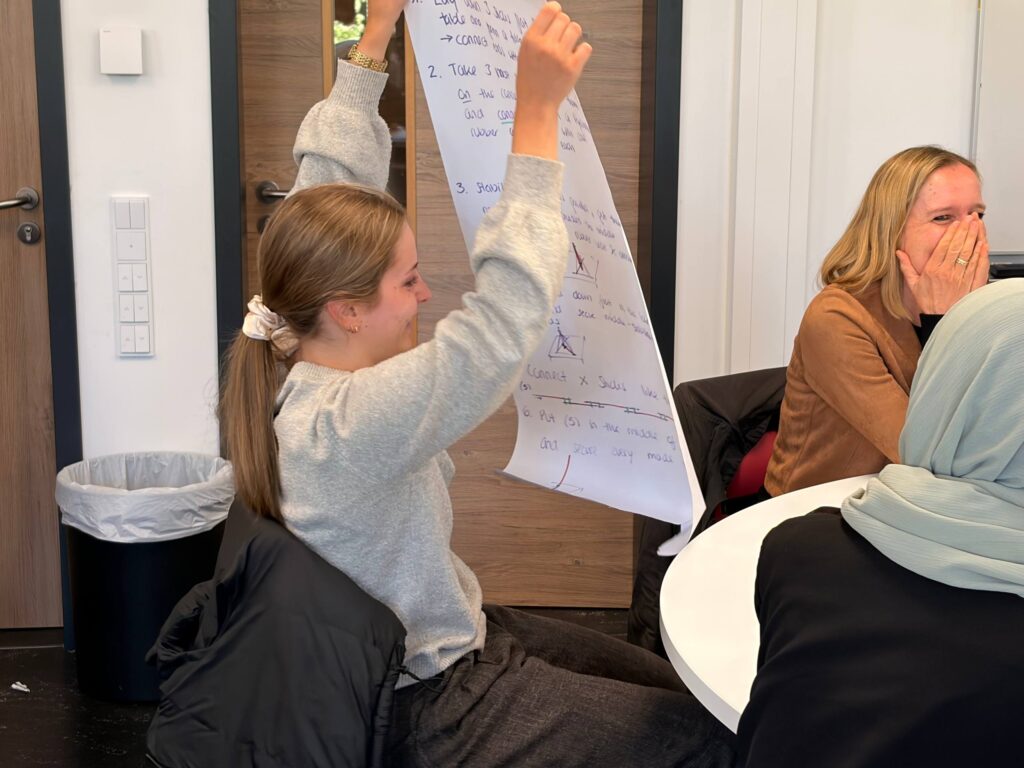
Then there was Team Overengineering. Their mission was to start by carefully testing the materials and writing a detailed plan before building anything. They were allowed to adapt their plan as they went once, but whatever they wrote down had to guide their actions without changing along the way (well at least that was the plan!).
And finally, the two freestyle teams. As the name suggests, their approach was pure trial and error. No instructions, no restrictions, just building, failing, adjusting, and trying again.
The Ceiling is the Limit!
So the challenge started: who would reach the ceiling first?
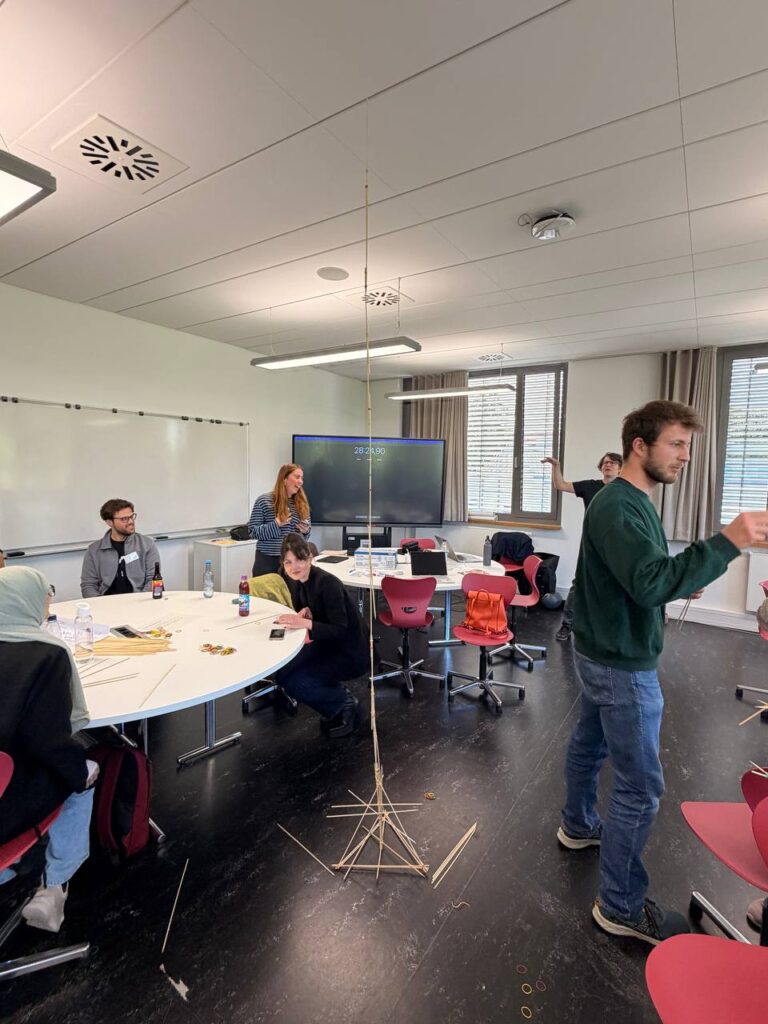
The freestyle teams took off immediately and quickly pulled ahead, while the other four teams were still busy developing strategies. But once the structured teams got going, things escalated quickly. Some constructions rose faster than expected, piece by piece, until one of the overengineering teams’ tower finally reached the ceiling. Their carefully thought-out concept turned out to be both creative and effective. (And it may or may not have helped that their team included an architecture maters student, an engineering student, and a maths professor)
But how did the teams approach the challenge?
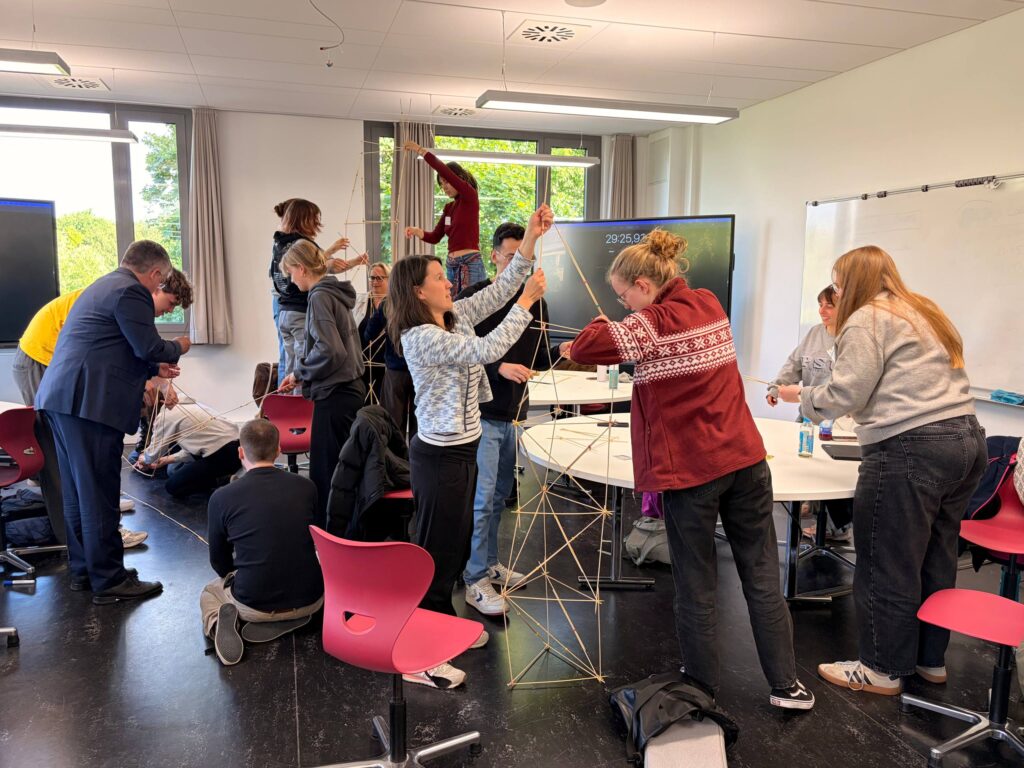
The two Overengineering teams had very different processes. The winning team used their analysis of the materials and constraints to discover a clever structural idea hidden within the task itself. The other team also developed an interesting concept, but when it proved impractical, they had to start over, losing valuable time resulting in the tower at the end being a bit more…grounded.
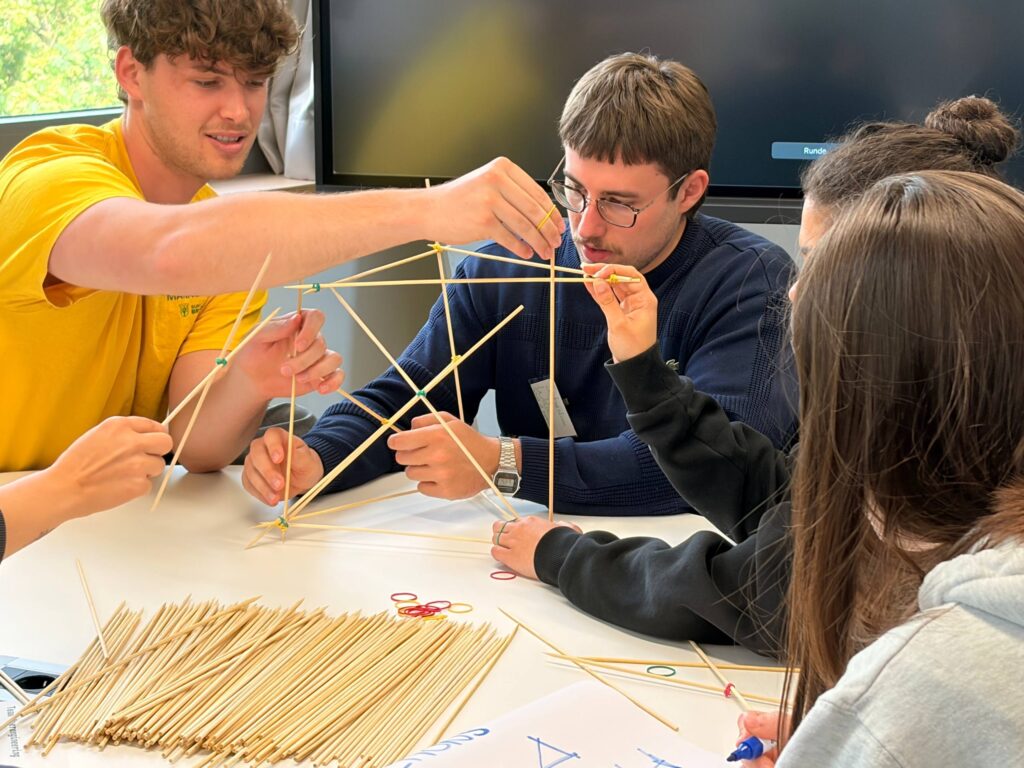
The AI teams faced a different limitation. With only two prompts available, their instructions remained relatively basic. As a result, much of their effort went into interpreting and debating how to implement those instructions. Interestingly, this led to very different tower designs.
And the freestyle teams? They simply built. No long discussions, no elaborate planning. They tested ideas, discarded what did not work, and kept what did. It was a bit messy, maybe inefficient at times, but surprisingly effective.
What We Learned
As with our tower building, ultimate control is not always the key to success or happiness. Remaining flexible in how we handle the world around us and staying open to making mistakes and readjusting our strategies should not be tossed just because artificial intelligence is able to deliver quick and (mostly) perfect results.
Now its your turn: Tell us your thoughts on the role artificial intelligence plays in how you handle challenges. And how much control do we actually need in our lives?


Leave a Reply