Mistakes Set In Stone

Blog: June 2nd 2026 Construction Defects – Amusing and/ or Consequential?
Lecturer: Prof. Dr.-Ing. Elisabeth Krön,
Faculty of Architecture and Civil Engineering
Authors: Carolina Otto, Eric Hartmann

Have you ever walked into a room and noticed a mistake so absurd you just had to laugh? A floor texture changing right in the middle of the room, or a toilet that can’t be mounted because the sewer pipe was accidentally tiled over, or even a sagging ceiling? Everyday construction defects are usually obvious and frustrating failures. But what if an entire building looks like a colossal mistake on purpose?
A Matter of Perspective

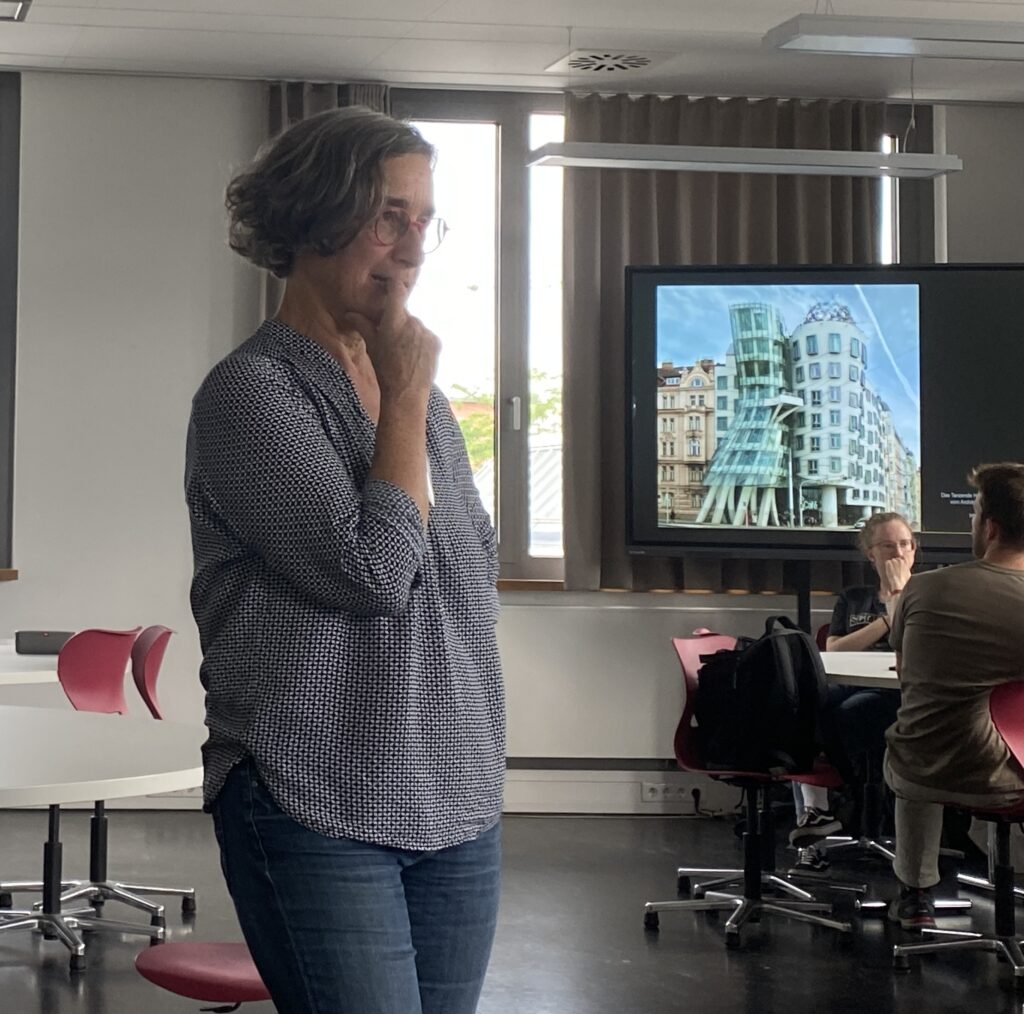
Our session kicked off with a look at a very peculiar building: The Dancing House in Prague.

Looking at its warped, seemingly crushed glass facade, one might immediately ask: Is this a mistake? Did something go terribly wrong during construction? The answer, as we learned, depends entirely on your perspective.

The building hasn’t collapsed; it is stable and highly functional. It has become a famous landmark, sparking associations of two people dancing. Yet, it also faces criticism for looking “too modern” or out of place next to traditional architecture. Some might argue its glass front makes it impractically hot in the summer.
This led us to a crucial realization: A true failure in architecture would be if the building broken into pieces. Everything else is a matter of opinion and perspective; aesthetics are subjective. Another point we discussed was the building looking unique from the outside but perhaps being a nightmare to work inside of. Ultimately, a mistake only truly becomes a failure depending on how you define function, economy, and aesthetics.
Risks, Rules and Common Sense

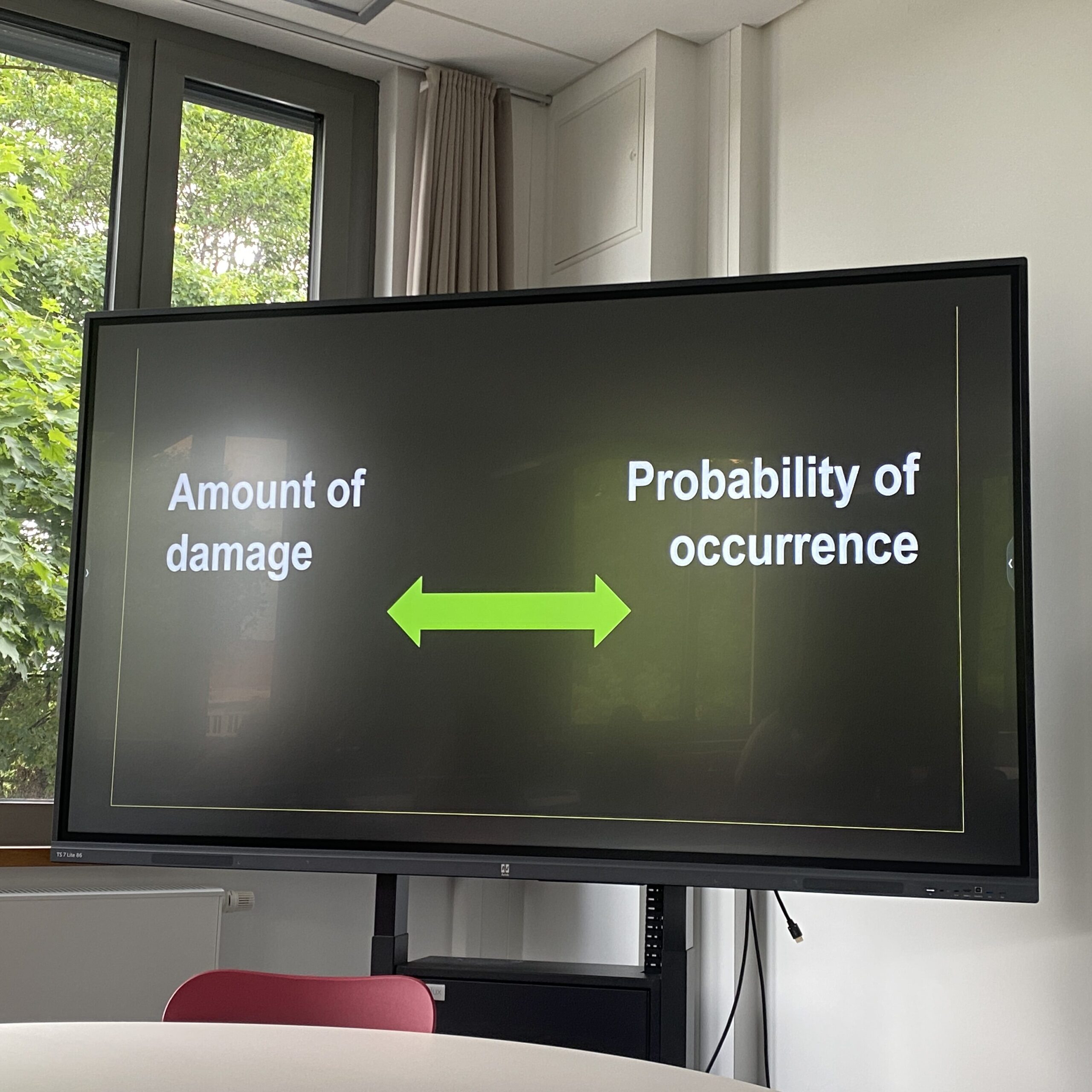
But when does a mistake actually become a problem? Not every error is catastrophic; sometimes, it’s an opportunity. If you don’t take risks, nothing new or innovative will ever be built. However, in the construction sector, risks must be carefully managed by weighing the potential amount of damage against the probability of it happening. For example, if water came through the glass facade the amount of damage would be very high but the probability of occurance is very low.

Sometimes, attempting to prevent mistakes leads to entirely different absurdities. We heard a funny anecdote about a handrail in the W-building of the THA where signs had to be put up explicitly telling people not to place objects on it, in case they fall and hurt someone below. It should be common sense, but a safety inspection demanded it. This shows how the fear of liability and potential damage can force us into over-explaining the obvious.

Another point of discussion was about who takes responsibility of mistakes in architectural projects. Is it the company who constructs the building, the maintenance team, the architect or the person who signed the contract?

It’s crucial to choose an experienced company for such complicated projects in order to prevent any occuring failures.

The “Baumängel Quartett”
A Game of Flaws

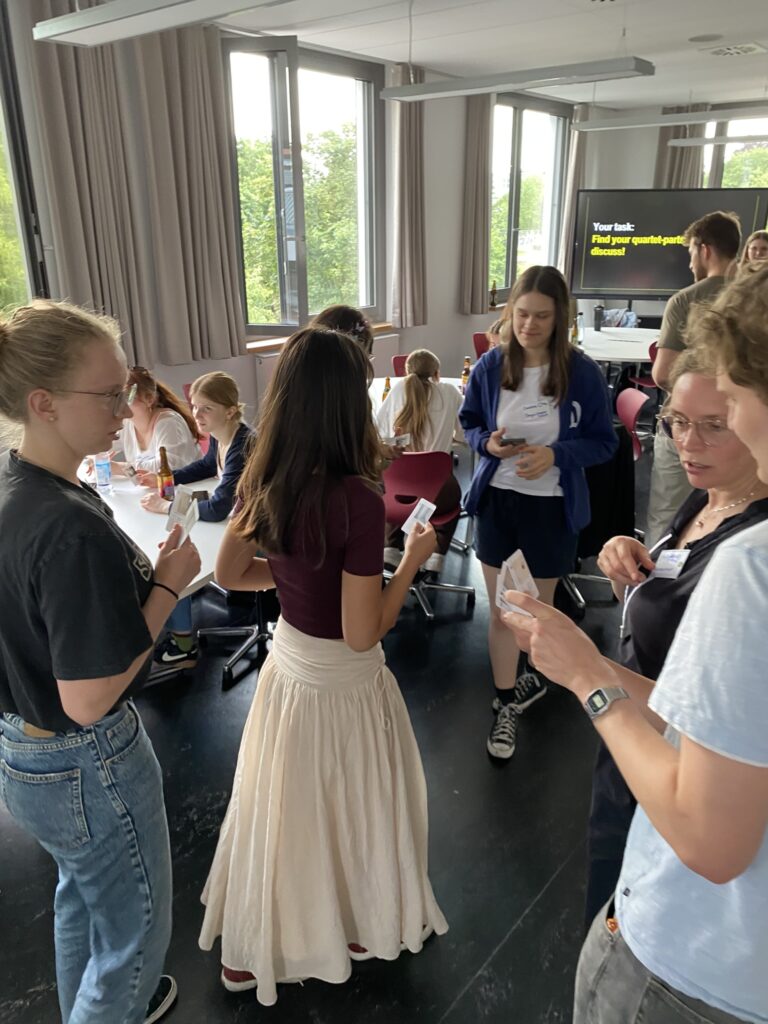
To get a better idea of construction errors, we split into groups using a rather unique card game: The “Baumängel Quartett” (Construction Mistake Quartet).
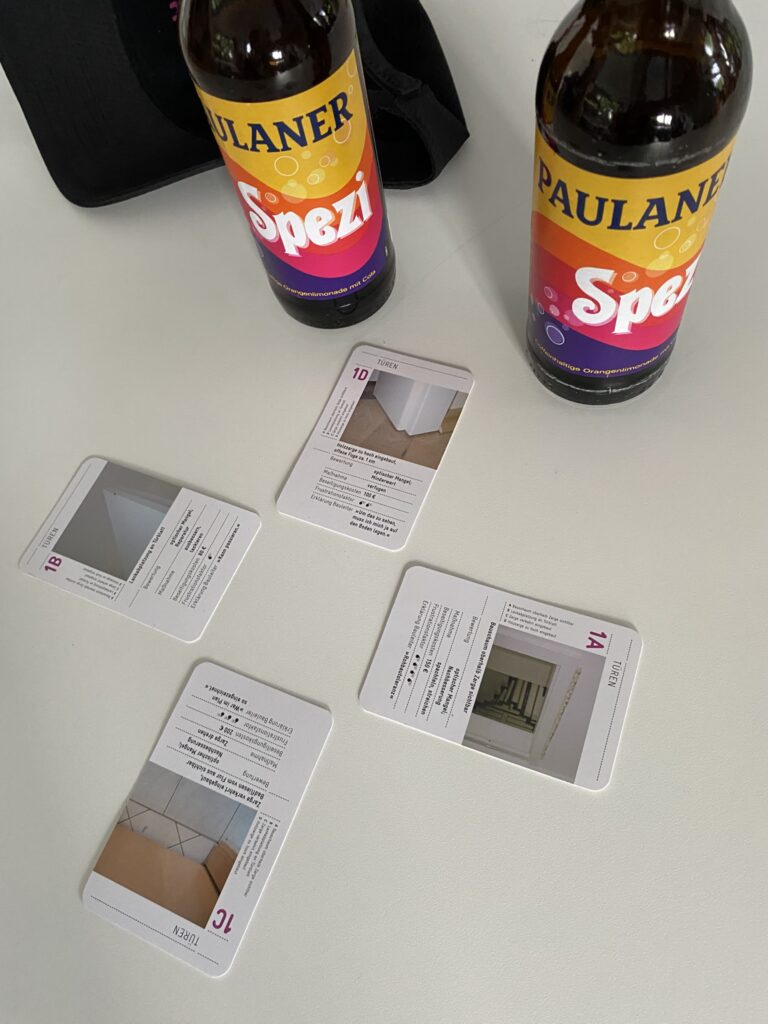
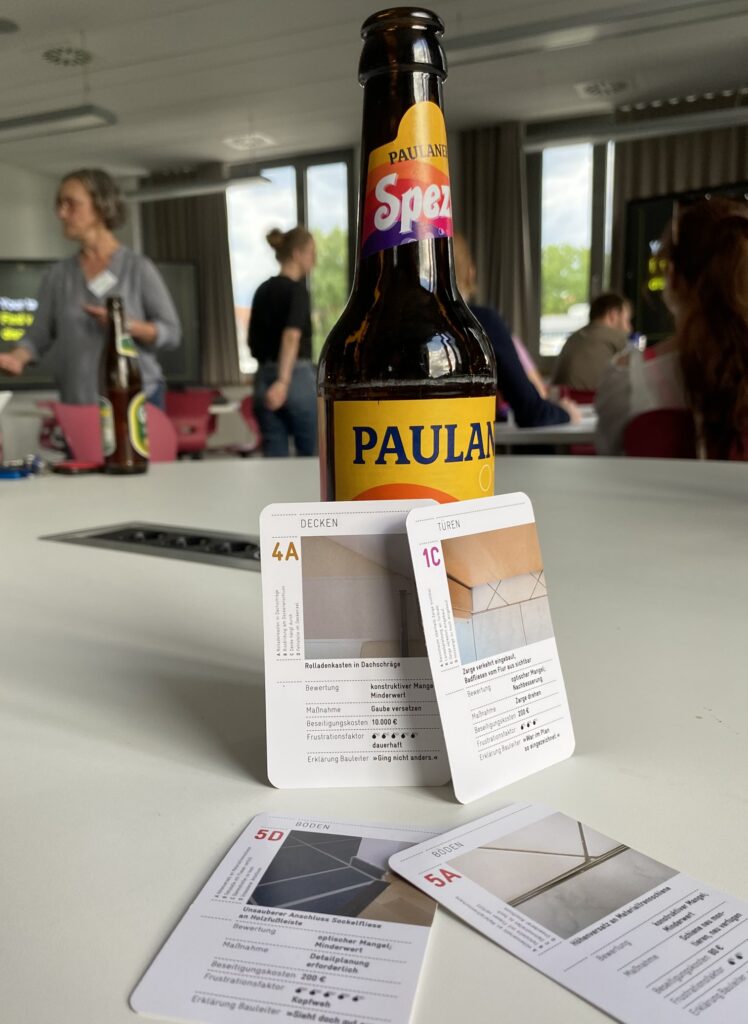
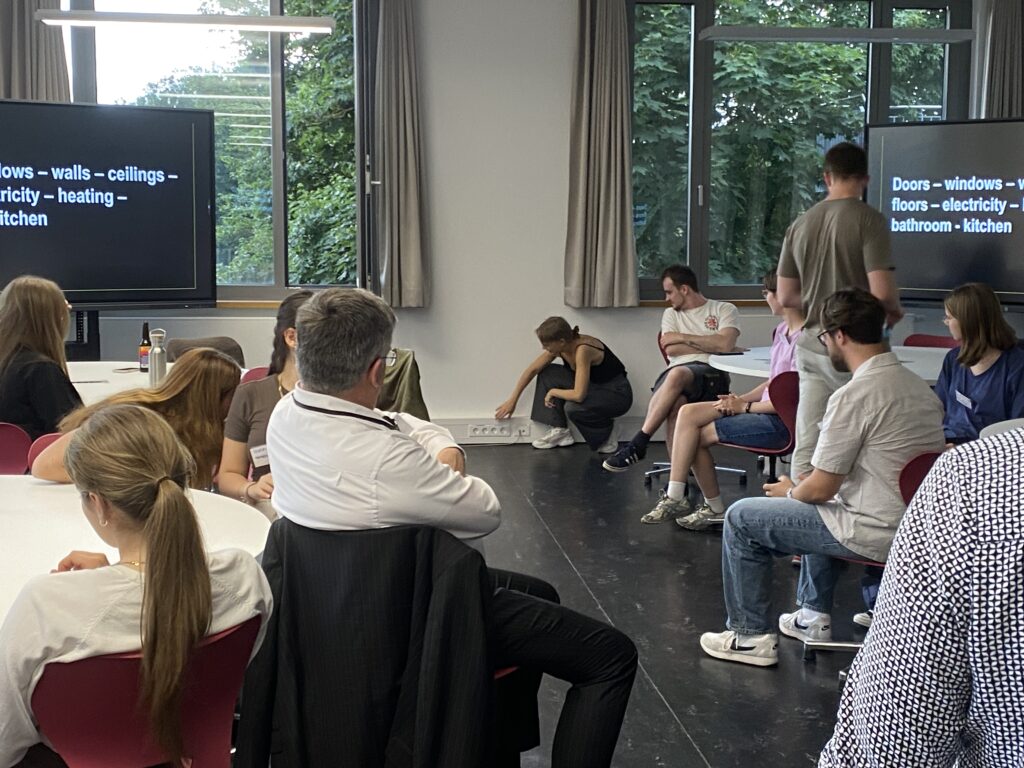
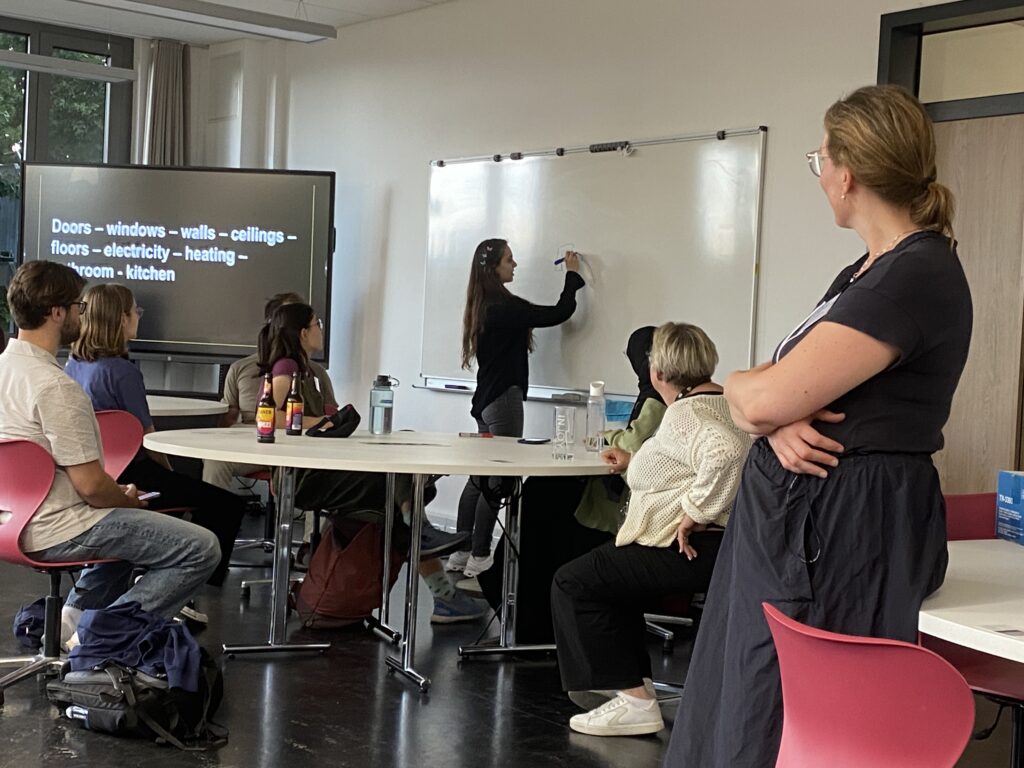
The groups were divided into nine areas of construction mistakes:

Doors, Windows, Walls, Ceilings, Floors, Electricity, Heating, Kitchen and Bathroom.

Our task was to analyze various real-world building mistakes and debate which ones were the absolute worst. We quickly realized that construction mistakes range from dangerous to downright hilarious.

Some of the worst mistakes included:

  • The cringe-inducing sight of a floor texture changing right in the middle of a room instead of hidden neatly beneath a door.
  • Curved walls, therefore DIN-normed baseboards won’t fit.
  • Sagging or uneven ceilings, often brushed off by site managers with the classic excuse: “Das kuckt sich weg” (roughly: you’ll get used to it and stop noticing).
  • Heating radtiators colored differently than the wall.
  • Outlets hidden behind a heating radiator.
  • Bathtubs awkwardly shoved behind panel windows.
  • Toilets that can’t be mounted because the sewer pipe was tiled over.
  • Random pipes sticking out of the floor for no reason.

Root Causes

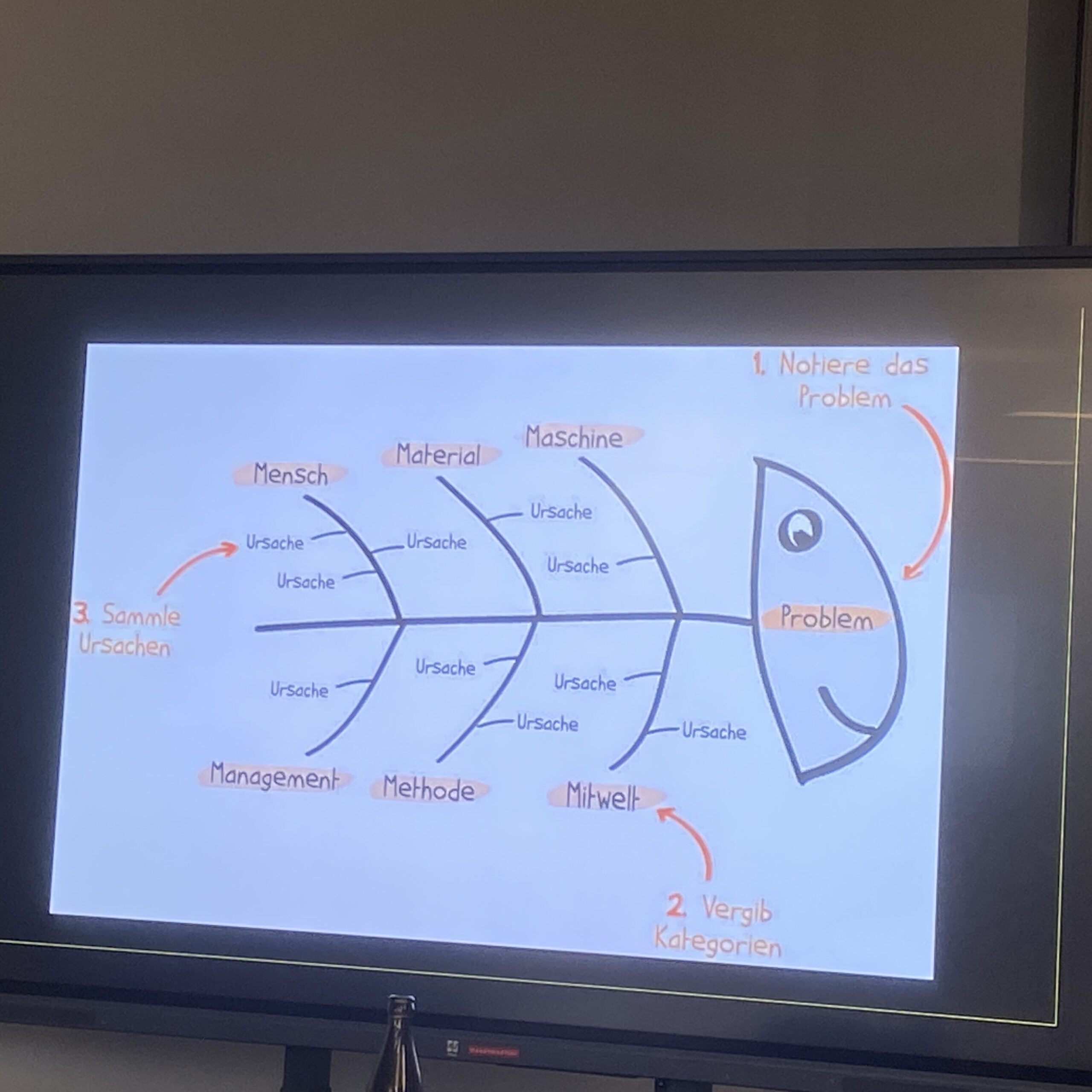
While laughing at a misplaced electrical outlet or a mismatched radiator is easy, a look at the Fishbone diagram reminded us that these visible errors are just the end result. There are many reasons for mistakes:

  • The people involved
  • Materials
  • Machinery
  • Management
  • Methods
  • Environment

Everything starts with planning.
Mistakes don’t just happen on the construction site; they often begin on the architect’s drawing board or even with the unrealistic demands of the client. As it turns out, the architect isn’t always the one to blame.

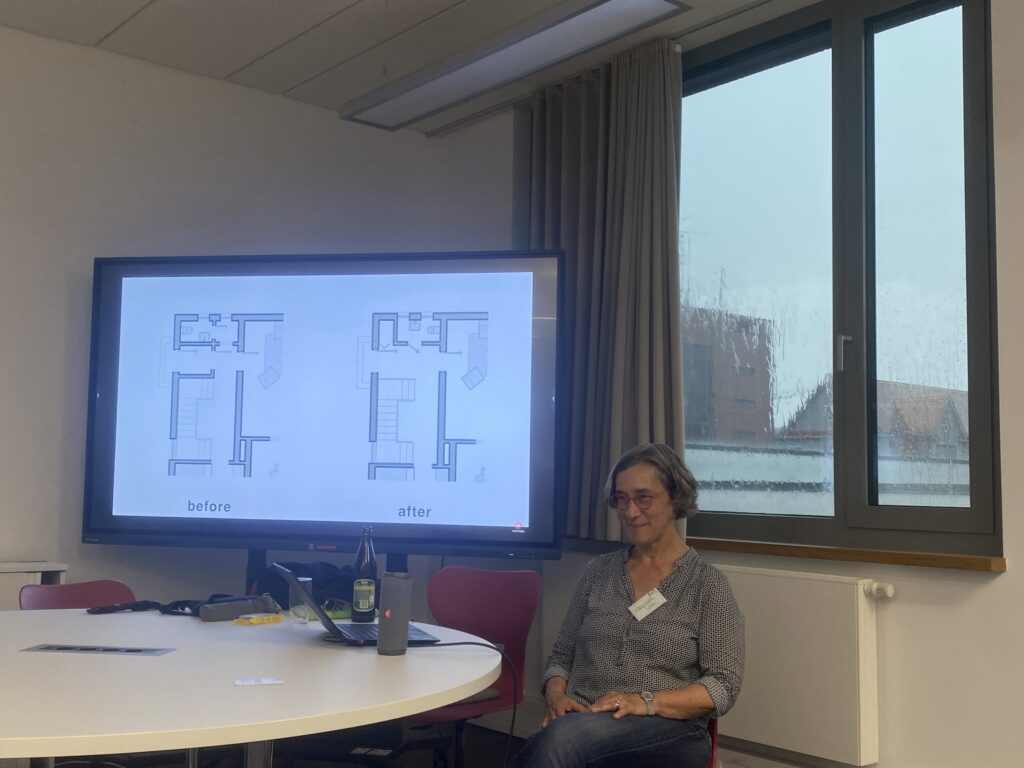
For example, a well-designed floor plan is key to making an apartment comfortable. Everything starts in the planning phase, and taking the time to carefully map out the layout beforehand saves a massive amount of headaches later on. Ultimately, a well-thought-out draft including windows, stairs, doors and an entrance area can make the difference between a warm and welcoming home and a frustrating, closed-up space full of awkward corners.
Final Thoughts

The fascinating and terrifying thing about mistakes in construction is their permanence. Unlike a typo in an essay or a bad move in a chess game, a building mistake is long-lasting, incredibly visible, and very expensive to fix. It forces everyone to live with the failure, adapt to it, or eventually find it funny.

Now we want to hear from you: Have you ever encountered a “construction mistake”, either a literal one in your apartment or a metaphorical one in a project that was incredibly frustrating at first, but ended up becoming a funny quirk you just learned to live with? Let us know in the comments!


Posted

in

by

Tags:

Comments

Leave a Reply

Your email address will not be published. Required fields are marked *

8 responses to “Mistakes Set In Stone”

  1. Runa Avatar
    Runa

    The construction mistakes monologues we witnessed last week will definitely make honors seminar top moments for me (we should really start a list on that). This was a very inspiring lesson, especially since architecture was a subject many in the room had pushed to the back of their minds since art A-levels, or building their own houses, in some cases. A construction mistake my flatmates and I discovered recently was that our kitchen cabinet next to the sink is ever so slightly tilted downwards, so any water spillage will drop directly onto the floor. While this is annoying, the game we played during seminar made me appreciate everything else in our flat that does work.

    Good job at capturing this lesson in your blog post, this was a great read!

    1. Carmen Avatar
      Carmen

      Today I woke up to find that my curtain had fallen to the floor once again because the glued curtain holders had come loose from the balcony door. Normally, that would not be much of a problem, but this is probably close to the tenth time it has happened since I moved into this flat. It seems that the balcony doors in our building are simply too smooth for any type of adhesive to hold properly. Funny enough, when I saw the curtain lying on the floor, I immediately thought back to last Thursday’s lesson and the various mistakes that can occur during construction. I doubt that my slightly too smooth balcony door would qualify for the “Baumängel-Quartett”, but it is a good reminder of how even small construction defects can have a significant impact on everyday life, or in my case, on my sanity.

      Thanks to the lesson, I now have a greater appreciation for all the things in my flat that actually work as intended. Thank you for the new perspectives on engineering you provided during the lesson and for this interesting blog post, for everyone who could not make it to the lesson, or wants to fresh up the memory of it!

  2. Juan Diego Hartmann Gonzalez Avatar
    Juan Diego Hartmann Gonzalez

    I really enjoyed reading this blog post because it made me realize that construction mistakes are basically the permanent version of typos. The only difference is that you cannot just press backspace, and fixing them probably costs more than my entire degree.
    I especially liked the example of the Dancing House, because it shows that what looks like a mistake at first can actually become something iconic. At the same time, the examples from the “Baumängel Quartett” were both funny and slightly terrifying. A toilet that cannot be mounted because the sewer pipe was tiled over sounds like the kind of problem where everyone just silently stares at the wall for five minutes.
    For me, the funniest but also most relatable part was the phrase “Das guckt sich weg.” I feel like this could apply not only to construction, but also to group projects, messy presentations, and probably my sleep schedule during exam season. Overall, the blog post showed very well that mistakes can be frustrating, expensive, creative, or funny, depending on the perspective and maybe also depending on who has to pay for them.

  3. Clara Avatar
    Clara

    When I think back to these session I instantly have to think of the “Baummängel-Quartett”. I didn’t know that a game like this existed, but it was really funny to see and discuss the flaws. This was especially true given the extraordinary acting skills of some of the students when presenting the various “Baummängel”.
    The session gave me an insight into a completely different field, as well as showing me how some kinds of “mistakes” can be discussed, except the differences between a “flaw with harm” (“Mängel mit Schaden”) and a “flaw without harm” (“Mängel ohne Schaden”).
    An example of a flaw without harm in my room is a light switch that is not connected and functional. When I first moved in, it was a bit frustrating when I wanted to turn on the light and that specific switch didn’t work, but over time I automatically use the functional switch and sometimes forget about the other.

  4. Angelina Mamani Quispe Avatar
    Angelina Mamani Quispe

    Design and working flaws happen more often than you’d think. At least that’s how it is for me… haha. Well, to be honest, it’s usually because I wanted to finish something quickly or thought, “It’ll be fine,” instead of double-checking the measurements or taking the more time-consuming but safer working step. In most cases, it works out, but sometimes it just ends up creating more work for me. For example, I’ve had to resaw shelf boards or repaint a wall in my apartment because of this. These mistakes cost me more work and time, but they’re not visible afterward. It’s much more annoying when the mistakes remain visible. Like when I built a chest and was too lazy in the end, to grab a measuring stick to double-check the trim on the lid… I figured the measurement was about right and ended up cutting off a few millimeters too much. It’s not a noticeable mistake, but once you know it’s there, you notice it every time… but thanks to the seminar, I can now smile every time I look at the chest because I remember the Quattet game we played at the end of the seminar. My mates explained and portrayed the mistakes depicted in that game in such a funny way that it turned into something amusing. And that has carried over into my everyday life. 🙂

  5. Tanja Rohrmayr Avatar
    Tanja Rohrmayr

    For me as well, the lecture was truly a great pleasure and extremely fascinating. Since this is my professional field and I studied architecture myself, it was something very special from my perspective.

    When you deal with construction defects on a daily basis and constantly have to navigate the complexities of German legal procedures, you can sometimes lose the perspective of a neutral observer. That was the aspect I found most interesting.

    The first reactions to the defects shown in the “Baumängel-Quartett” were laughter and amusement. My reaction, however, was quite different: my mind immediately started working through the practical questions. Who is responsible for this? How would I write the defect notice? How could I best claim the damages?

    Yet it is exactly in our daily work that we should not forget to have a little fun. For me, it was a wonderful reminder that mistakes can also be something to laugh about.

    So the next time one of my contractors installs a wastewater pipe the wrong way around or labels the floors incorrectly (both true stories, by the way), I will pause for a moment, think of the “Baumängel-Quartett,” and allow myself a brief smile.

    Perhaps I should encourage my colleagues to create our own internal version of a “Baumängel-Quartett.” The entertainment at the next company party would certainly be guaranteed!

  6. Marina Avatar
    Marina

    When I visited a very well-preserved house from the Edo period in Japan, I couldn’t help but notice that one part of the wooden floor creaked. At first, I thought nothing of it because it was an old house, and wooden floors tend to warp over time due to age and humid weather. But it was just one specific spot that creaked. Nowhere else.

    That’s when my aunt explained to me that this part of the floor had been constructed to creak on purpose. Why? Because it led to the bathroom. See where this is going?

    It wasn’t age or a construction mistake that caused the floor to creak. It was a precautionary measure—a warning system against peeping Toms. Sometimes, what seem like mistakes turn out to be ingenious little details instead.

  7. Stefanie Avatar
    Stefanie

    I really enjoyed this seminar in particular. The card game especially stood out to me, it was fascinating to see just how many mistakes actually happen during construction. I never would have guessed that there were so many, and so many different kinds. To me that fits the theme of “Failing Forward” perfectly: the mistakes are frustrating at first, but once you collect them and laugh about them together, that’s actually when you learn the most. Thanks for the great recap of the session! 🙂